
10 years later, Manila says Hague victory vs Beijing still ‘unassailable’

The Philippines has forcefully reaffirmed that the landmark 2016 South China Sea arbitral ruling is final, binding, and beyond challenge, pushing back against fresh attempts by Beijing to discredit the decision just weeks before its 10th anniversary.
In a strongly worded statement issued on June 22, the Department of Foreign Affairs (DFA) rejected recent remarks by Chinese Embassy Deputy Spokesperson Guo Wei, who again described the ruling as “illegal, null and void” and a “political farce disguised in legal clothing.”
Instead, Manila underscored that the ruling has become a permanent pillar of international maritime law.
“The award is final and binding and has become an unassailable part of the corpus of international law, providing legal clarity regarding maritime rights and entitlements in the South China Sea,” the DFA said.
“It is not and will never be illegal, null and void,” it added.
The unusually emphatic response comes ahead of July 12, when the Philippines marks the 10th anniversary of its landmark legal victory against China before an arbitral tribunal constituted under the Permanent Court of Arbitration.
The case, initiated by Manila in 2013, challenged China’s sweeping claims over much of the South China Sea under its so-called “nine-dash line.”
On July 12, 2016, the tribunal overwhelmingly ruled in favor of the Philippines, declaring that China’s expansive historical claims had no legal basis under the United Nations Convention on the Law of the Sea.
China has consistently rejected the decision and refused to participate in the proceedings, although the tribunal proceeded under mechanisms provided by UNCLOS, to which both countries are signatories.
The DFA also rejected Beijing’s long-held argument that the arbitration violated an obligation to settle disputes solely through bilateral negotiations.

“The Philippines acted within its rights and obligations as an UNCLOS State Party, especially when years of dialogue with China failed to achieve progress,” the DFA said.
The department further stressed that the tribunal itself had already dismissed China’s arguments that the case involved issues of territorial sovereignty and maritime boundary delimitation that supposedly fell outside its jurisdiction.
“There should be no confusion that the 2016 Arbitral Award is focused on issues concerning the interpretation and application of UNCLOS, including the legal status of maritime features, maritime entitlements under the Convention, and the compatibility of certain maritime claims with international law,” it said.
The DFA also pushed back against assertions that the Philippines bypassed diplomatic channels before filing the case.
“The Tribunal confirmed that the Philippines has met the requirement under Article 283 of the Convention that the parties exchange views regarding the settlement of their disputes,” it said.
Even as Manila reiterated its commitment to dialogue and diplomacy, it said this does not prevent the country from resorting to international legal mechanisms when consultations fail.
“While the Philippines remains committed to dialogue and diplomacy, it is not precluded from availing itself of dispute-settlement mechanisms under UNCLOS when disputes concerning the interpretation or application of the Convention cannot be resolved through consultations,” the DFA said.
As the decade mark approaches, Manila framed the arbitral ruling not simply as a bilateral dispute with China but as a global legal precedent that benefits all nations.
“Respect for these rulings is essential to preserving the integrity, credibility, and universality of the Convention and the rules-based order it embodies,” the DFA said.
The department noted that the award has since been cited in several international decisions and judgments and has become an important reference point on issues ranging from excessive maritime claims to environmental protection.
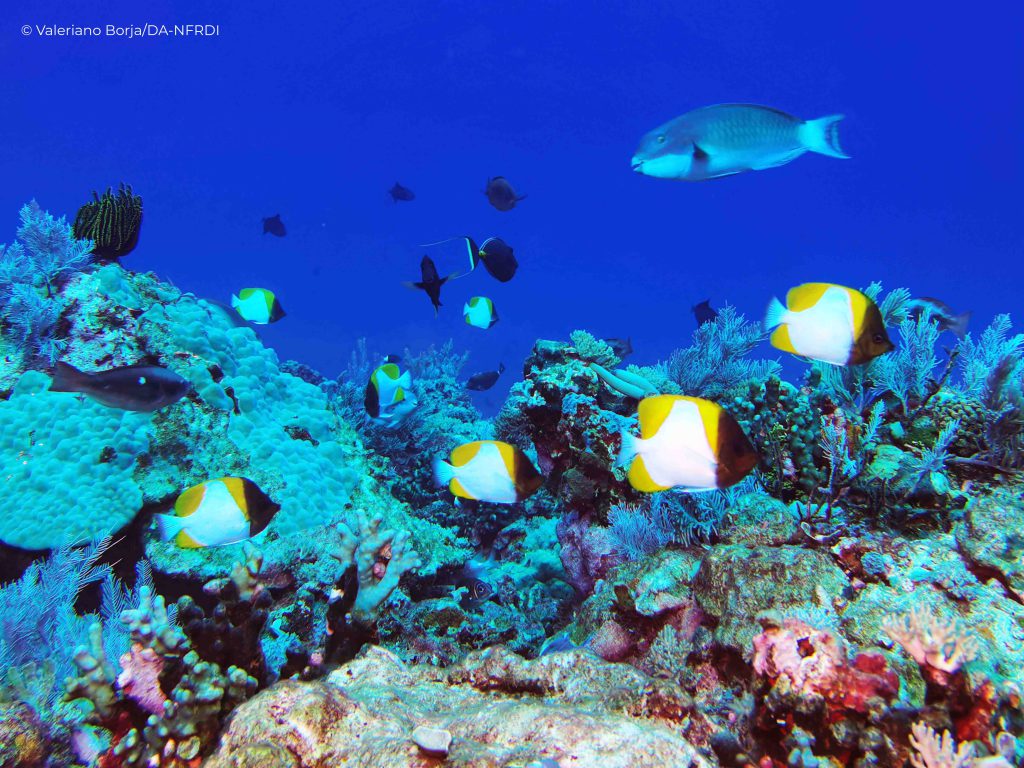
It said the tribunal’s findings continue to shape international law, particularly on the protection of fragile coral reefs, biodiversity conservation and preventing severe environmental damage in the world’s oceans.
“As we commemorate the Award’s 10th anniversary this July, we highlight its resounding affirmation of UNCLOS and of the Convention’s dispute-settlement mechanisms,” the DFA said. Veronica Uy


No comments: